
How to Reduce Swelling from a Tooth Abscess: Fast Relief & Next Steps
A tooth abscess needs dental attention; however, a few home remedies may help ease the pain. This blog will focus on those. This blog is for educational purposes.
It can be frightening to wake up with a painful bump on your gums or a swollen cheek from a tooth abscess. This is something that dentists frequently see patients with on a weekly basis. Your body uses that swelling as a warning sign that bacteria have gotten past your tooth’s defenses.
If you are looking for how to reduce swelling and tooth abscess discomfort while you wait to see a professional, you are in the right place.
Below, we’ll examine what’s going on inside your jaw, along how to reduce swelling from a tooth abscess before your dental appointment.
What is a Tooth Abscess?
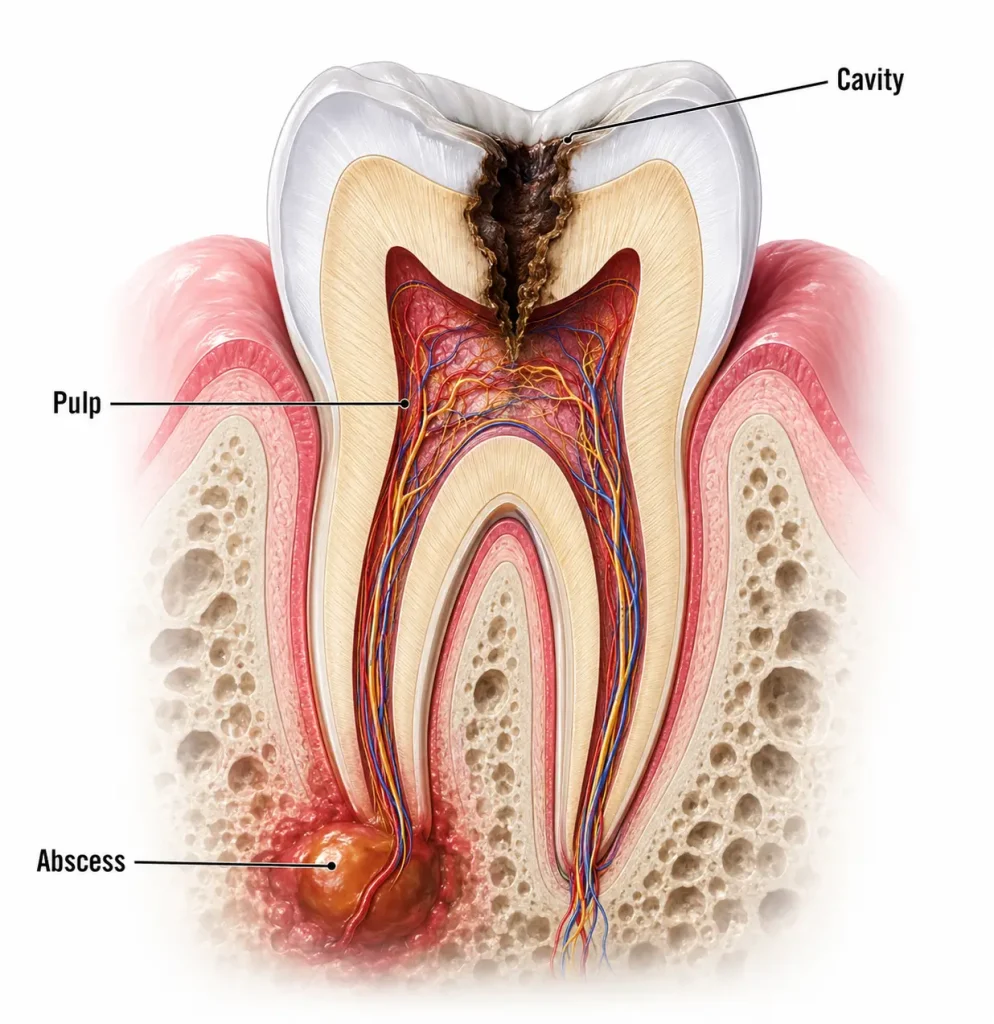
A tooth abscess is a pocket of pus caused by a bacterial infection. It usually starts when a deep cavity, a cracked tooth, or gum disease allows bacteria to reach the pulp (the living center of your tooth containing nerves and blood vessels).
When the infection builds up at the root tip, pressure increases, causing painful swelling in your gums, jaw, or face.
4 Safe Ways to Reduce Tooth Abscess Swelling at Home
Let’s be completely clear: Home remedies cannot cure an abscess. Only a dentist can clear the infection. However, these clinical tips will help you manage the pain and lower the swelling until you get into the dental chair.
1. Use a Cold Compress
Cold is your best friend when it comes to acute swelling. Wrapping an ice pack or a bag of frozen peas in a clean towel and applying it to the outside of your cheek restricts blood vessels. This slows down the inflammatory response and numbs the pain.
- The Method: Apply the cold compress for 15 minutes on, then 15 minutes off. Repeat as needed. Never apply ice directly to the skin.
2. Rinse with Warm Salt Water
A warm salt water rinse is a natural, mild antiseptic. The salt draws fluid out of the inflamed gum tissue through osmosis, which reduces the intense throbbing pressure.
- The Method: Dissolve 1/2 teaspoon of standard table salt into a glass of warm water. Gently swish it around the affected area for 30 seconds, then spit it out. Do this 3 to 4 times a day.
3. Take Anti-Inflammatory Medications
Over-the-counter pain relievers can drastically improve your comfort. Non-steroidal anti-inflammatory drugs (NSAIDs) like ibuprofen are generally preferred over acetaminophen for dental issues because they directly target the chemical pathways causing the swelling.
- Dentist Note: Take these medications exactly as directed on the packaging. Do not place an aspirin pill directly against the swollen gum tissue, as this will cause a chemical burn.
4. Keep Your Head Elevated
When you lie down flat, blood flow rushes to your head, increasing the fluid pressure around the infected tooth. This is why toothaches always seem to get worse right when you try to go to sleep.
- The Method: Prop your head up with an extra pillow or two when resting or sleeping to encourage fluid drainage away from your jaw.
What NOT to Do When Managing an Abscess
When you are desperate for relief, it is easy to try things that can actually make the infection worse. Avoid these common mistakes:
- Do not apply heat directly to the cheek: While a warm rinse helps inside the mouth, putting a hot heating pad on the outside of your face can draw the infection outward, worsening the facial swelling.
- Do not pop the bump: If you notice a pimple-like bump on your gums (a gum boil), do not try to squeeze or pop it with a needle. You risk pushing the bacteria deeper into your bloodstream or surrounding facial tissues.
- Do not ignore it if the pain stops: If an abscess suddenly stops hurting, it usually means the nerve inside the tooth has died. The infection is still very much alive and eating away at the surrounding bone.
When a Swollen Tooth Becomes an Emergency
A tooth abscess is not something to take lightly. If the swelling spreads rapidly or you develop any of the following symptoms, skip the dental office and go straight to the nearest emergency room:
⚠️ Emergency Red Flags:
- Difficulty swallowing or breathing
- Swelling that spreads to your eye or down your neck
- A high fever or chills
- Inability to open your mouth fully (trismus)
These are signs that the infection is spreading to deeper spaces in your head and neck, which can become life-threatening if left untreated.
How Your Dentist Will Fix It
When you come into the office, our priority is removing the source of the infection so your body can heal. Depending on the severity of the abscess, we will typically recommend one of three treatments:
- Draining the Abscess: Making a tiny incision in the gum tissue to allow the trapped pus to escape, instantly relieving the pressure.
- Root Canal Therapy: Cleaning out the dead pulp and bacteria from inside the tooth’s roots, sealing it, and saving your natural tooth.
- Tooth Extraction: If the tooth is too severely damaged to save, removing it entirely to allow the socket to heal.
We may also prescribe a course of oral antibiotics if the infection shows signs of spreading.
Final Thoughts
Knowing how to reduce swelling and tooth abscess discomfort can help you get through a rough night, but it is strictly a temporary band-aid. Please call your local dental clinic as soon as possible to get a proper diagnosis and X-rays. We are trained to handle these emergencies safely and get you back to living pain-free.
Want to know what happens to Abscess after tooth extraction? Read this blog on – Abscess After Tooth Extraction